
13 Reasons Why Digital and Live Mock Tests Are Critical for Success in 2026

By 2026, competitive exams will punish one specific kind of student more than ever: the student who has “done everything” but trained in the wrong conditions. Syllabus completion, concept clarity, and long study hours will no longer guarantee results unless paired with repeated exposure to real exam conditions. Digital and live mock tests are no longer supplementary tools. They are the environment in which serious preparation must happen.
Exams are not neutral assessments of knowledge. They are performance events. They test how thinking behaves under time pressure, uncertainty, fatigue, and comparison with equally prepared peers. Mock tests are the only reliable way to enter that environment repeatedly before the stakes are real.
1. Exams now test execution under pressure, not understanding in isolation
Understanding a concept while studying is a controlled experience. Time is flexible, stress is low, and mistakes feel reversible. Exams remove all of that at once. Students must interpret unfamiliar wording, choose an approach quickly, and commit to answers without confirmation. By 2026, exams will increasingly reward decisiveness under pressure rather than careful, slow reasoning.
Digital and live mocks expose the gap between knowing a method and executing it reliably under adverse conditions. Until students experience that gap multiple times, preparation remains theoretical.
2. Digital exams introduce cognitive friction that paper practice hides
Screen-based exams change how students process information. Scrolling interrupts visual memory. On-screen navigation affects how students track unanswered questions. Switching between sections digitally introduces minor delays that quietly accumulate into lost time. Visual fatigue sets in earlier than expected, especially in longer exams.
Students who practise only on paper often misdiagnose these issues as carelessness. Digital mocks surface the real cause early and allow students to adapt their reading speed, navigation habits, and pacing strategies well before the actual exam.
3. Live mocks recreate psychological stress that self-study cannot simulate
Self-study is forgiving by design. Students pause, revisit questions, and step away when overwhelmed. Real exams do not allow that. Live mocks impose fixed start times, continuous pressure, and the knowledge that time will not wait.
Under these conditions, behaviour changes. Students rush decisions, second-guess correct answers, and feel anxiety spikes after difficult questions. These reactions are normal. Live mocks matter because they expose these reactions early and repeatedly, giving students the chance to learn to regulate them rather than being surprised on exam day.
4. Competitive exams reward relative performance, not perceived preparedness
By 2026, most outcomes depend on ranking, not raw marks. A score that feels “good” in isolation may be inadequate once peer performance is factored in. Many students only confront this reality after results are released.
Live mock tests introduce rankings, percentiles, and score distributions during preparation. This shifts the mindset from “Did I do well?” to “Is this performance competitive?” That shift fundamentally changes how students approach preparation.
5. Mocks expose recurring behavioural patterns, not just academic gaps
Exams are rarely lost because of a single mistake. They are lost because of patterns: spending too much time in certain sections, consistently misreading particular question types, or losing accuracy late in the paper.
Digital mock analysis makes these patterns visible across attempts, helping students feel understood and supported in their growth, making preparation more targeted and less reactive.
6. Time management is a trained response, not a planning exercise
Most students believe they have a time strategy. Very few have stress-tested it. Plans that look sensible on paper often collapse when faced with unfamiliar questions or early setbacks.
Mocks force real-time decisions about when to persist and when to move on, providing reassurance and a sense of control, which are essential for building confidence and resilience.
7. Static study schedules fail when exam behaviour shifts
Exam patterns evolve subtly every year. Question framing changes, section difficulty balances shift, and time pressure increases quietly. Rigid study plans that treat all topics equally struggle to keep up.
Mock performance data allows students to adjust focus dynamically. Preparation becomes outcome-driven rather than syllabus-driven. Effort is allocated based on impact, not habit.
8. Confidence without evidence collapses under pressure
Many students feel confident because they have studied extensively. That confidence often disappears when the exam feels unfamiliar or more challenging than expected. Confidence built on effort alone is fragile.
Mocks build confidence through evidence. Repeated exposure to pressure, stable scores across attempts, and predictable performance replace anxiety with familiarity. This strength.
9. Mental endurance now separates top performers from the rest
In long exams, most students don’t fail early. They fade. Fatigue sets in, focus drops, and minor errors accumulate. Mental endurance becomes a deciding factor.
Full-length digital and live mocks train sustained concentration, recovery after mistakes, and accuracy late in the test. This endurance cannot be built through short practice sessions.
10. Feedback-driven learning is far more efficient than passive revision
Revising without testing lacks direction. Students revisit material without knowing what actually affects performance. Mock tests create a tight feedback loop: attempt, analyse, adjust, reattempt.
Each cycle sharpens preparation. Instead of studying broadly, students focus on specific weaknesses and behaviours that directly affect their scores.
11. Mocks reveal inefficient effort early enough to correct it
Students often over-invest in topics they enjoy and avoid those that feel uncomfortable but score heavily. Without data, this imbalance goes unnoticed.
Mock results reveal where effort produces returns and where it does not. Correcting this early can save months of misdirected preparation.
12. Exam design evolves faster than official syllabi
Syllabi change slowly. Question styles, reasoning integration, and difficulty distribution do not. Students relying solely on static material often realise too late that the exam they prepared for no longer exists in the same form.
Mocks adapt faster and expose students to evolving patterns before those patterns become decisive.
13. Exam intelligence will outweigh raw effort in 2026
Exam intelligence includes knowing when to skip, how to pace energy, and how to stay composed when uncertainty appears. These are performance skills, not academic ones, and they can only be built through repeated exposure.
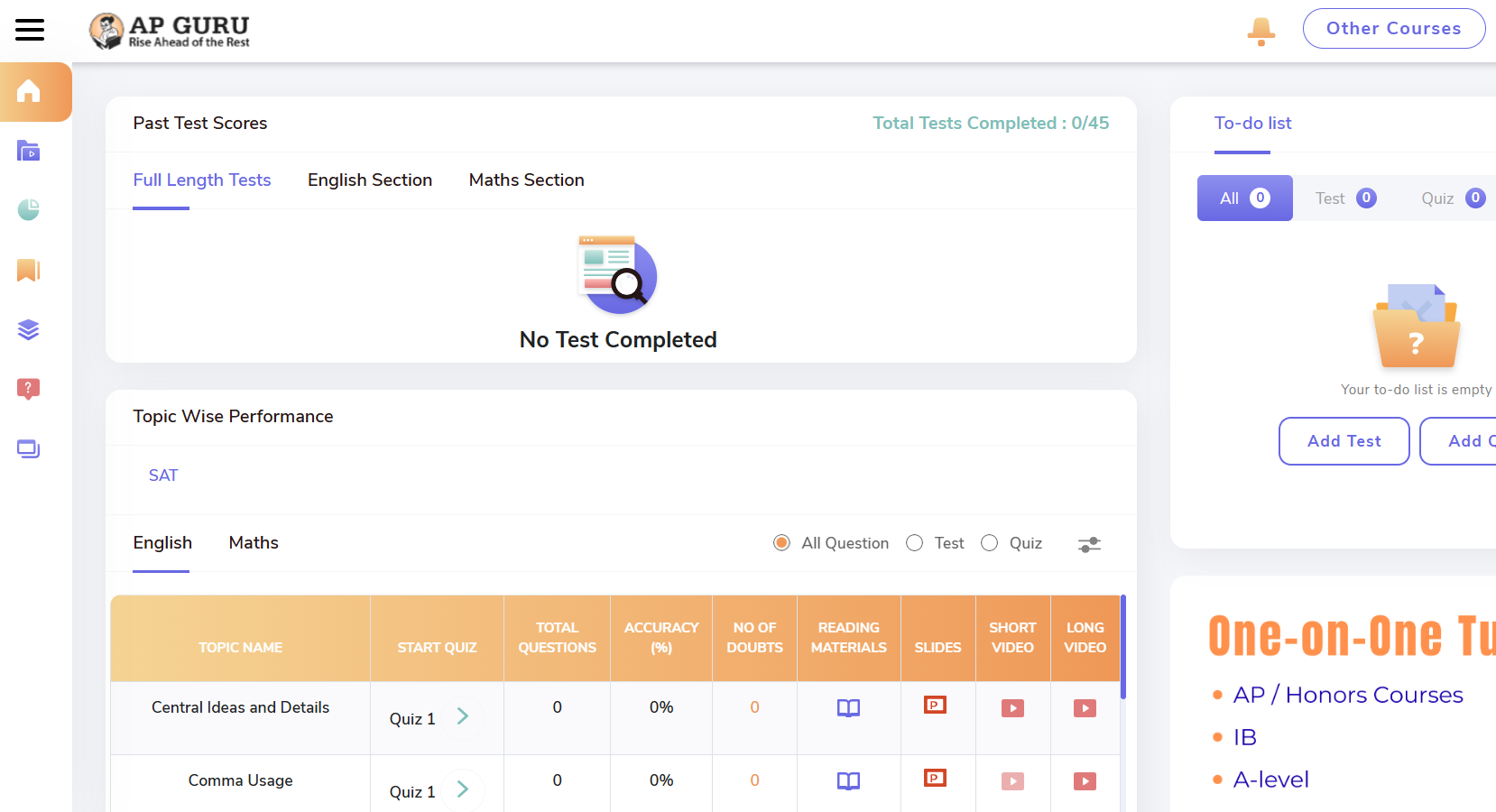
This is why structured preparation systems, such as those followed at AP Guru, integrate digital and live mock tests throughout the preparation journey rather than treating them as a final checkpoint. Continuous testing, analysis, and adjustment occur through a dedicated student platform that mirrors real exam conditions.
Access to this ongoing mock testing and performance analysis is managed through the AP Guru portal:
https://portal.apguru.com/
The portal exists to ensure that preparation reflects the realities of the exam early enough for meaningful correction.
Final perspective
Students will not fall short in 2026 due to a lack of effort. They will fall short because they trained in environments that did not resemble the exam itself.
Digital and live mock tests do not simply measure readiness. They create it.
The sooner preparation shifts from studying content to training performance, the more predictable success becomes.